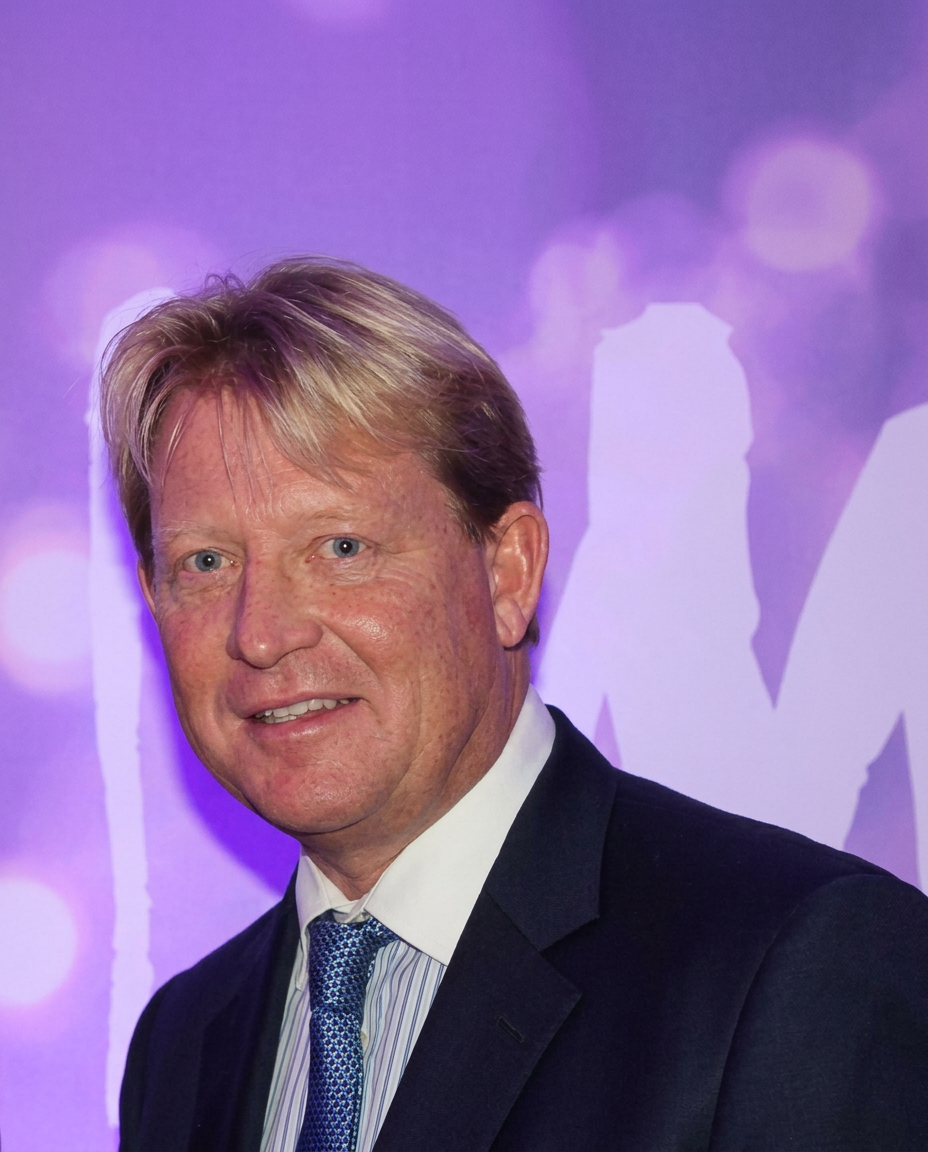
Joseph Gelet Sr.
General Partner

Strategic investment. Active partnership.
Bringing value to portfolio companies.
Venture Capital Cross Funds
Explore our perspectiveVenture Capital Cross is an active GP and a strategic investor, bringing value to portfolio companies including business development, technology consulting, growth hacking, intelligence analysis, and recruiting.
Portfolio
We believe the global economy is entering a period of structural change that will make the next several decades look very different from the last fifty years. Artificial intelligence, robotics, automation, advanced energy, new infrastructure systems, biotechnology, aerospace, and the gradual disclosure or commercialization of technologies once considered inaccessible are beginning to erode the assumptions behind traditional investing. The old model—passively allocating capital into established industries and waiting for market growth to compound returns—will become less effective as technology compresses margins, shortens competitive advantages, and rapidly reshapes entire sectors.
Our core view is that the age of passive investing is ending. The strongest opportunities will increasingly come from GP-led, strategic transactions in which the investor actively helps create enterprise value through business development, customers, partnerships, distribution, capital formation, infrastructure relationships, market entry, recruiting, and commercialization. In this environment, alpha will be created more often than discovered. The relevant question will not simply be, "Which company will win?" but, "Which company can we materially help win?"
AI and automation are attacking the cost structure of almost every information-heavy industry. Software development, research, design, marketing, professional services, analysis, administration, customer service, and many other functions are becoming faster and cheaper. Over time, the same pressure will move deeper into manufacturing, logistics, construction, healthcare delivery, agriculture, mining, transportation, and other physical industries as robotics and autonomous systems improve.
That will hollow out margins across many traditional businesses. Capabilities that once justified premium pricing because they required specialized labor, information, or institutional scale will increasingly become commoditized. Competitive advantages will turn over faster, and the number of viable competitors will increase because fewer people and less capital will be required to launch sophisticated companies.
We therefore expect durable value to migrate toward assets and capabilities that remain difficult to replicate: physical infrastructure, energy, land, manufacturing capacity, proprietary technology, engineering expertise, distribution networks, regulatory access, critical supply chains, strategic customer relationships, and the ability to coordinate complex real-world deployment.
The clearest investment opportunity in artificial intelligence has been the infrastructure required to support it: semiconductors, data centers, electricity generation, transmission, networking, cooling, cloud infrastructure, and related physical systems. This may prove to be one of the last broadly obvious opportunities created by AI.
The application layer will be much harder to underwrite. Thousands of startups will have access to increasingly similar models, software tools, agents, development frameworks, and distribution channels. Attractive products can be copied, model advantages can disappear, and features can be absorbed by larger platforms. Identifying the small number of companies that become true outliers may therefore be even more difficult than it was during the previous era of venture capital.
For that reason, our strategy emphasizes businesses where we can influence outcomes and where success depends on more than software alone. Technology combined with infrastructure, distribution, industrial capability, strategic customers, capital, regulatory positioning, and execution creates a more defensible opportunity than technology by itself.
A second major component of our thesis is the eventual reallocation of enormous technological and industrial capacity away from warfare and toward human development. For generations, defense spending has financed some of the world's most advanced work in aerospace, robotics, autonomous systems, sensing, logistics, communications, materials science, energy, manufacturing, and artificial intelligence. Those capabilities do not inherently belong to warfare.
As geopolitical conditions evolve, we believe portions of the defense-industrial base can increasingly redirect their technology, engineers, manufacturing systems, and capital toward civilian markets. A company that develops autonomous systems for hostile environments can apply similar technology to agriculture, mining, infrastructure inspection, disaster response, logistics, or construction. Advanced sensors developed for military surveillance can be applied to medicine, agriculture, environmental monitoring, transportation, and industrial safety. Aerospace engineering can support transportation, exploration, communications, and commercial infrastructure.
This transition could become one of the largest industrial pivots of the coming era: from technologies designed to destroy, deter, and dominate toward technologies designed to build, maintain, heal, explore, and provide abundance.
Robotics will be central to this transition. Instead of sending people into dangerous mines, disaster zones, extreme climates, deep oceans, or hazardous construction sites, autonomous machines can increasingly perform the work. Robots can excavate minerals, build housing, maintain infrastructure, plant and harvest food, plant trees, repair roads, inspect pipelines, construct tunnels, operate warehouses, support hospitals, assist the elderly, and explore environments that are expensive or dangerous for human beings.
The long-term economic significance is larger than labor substitution. Autonomous systems can make projects viable that are currently too expensive, too dangerous, or too labor-intensive to pursue. Mining becomes safer and potentially more precise. Housing can be manufactured and assembled faster. Agriculture becomes more automated and localized. Infrastructure can be continuously inspected rather than repaired only after failure. Remote regions become easier to develop, and exploration can extend into oceans, deserts, polar regions, underground environments, and eventually off-world locations.
This creates investable opportunities not only in robotics companies themselves but also in the infrastructure around them: power systems, machine vision, sensors, autonomy software, communications, maintenance, specialized manufacturing, materials, fleet management, and physical deployment.
Healthcare is another major destination for this transition. Many technologies developed under defense or aerospace programs—robotics, imaging, remote sensing, advanced materials, autonomous navigation, telepresence, communications, and AI—can be redirected toward human support. Autonomous systems can assist with patient transport, logistics, rehabilitation, elder care, medication delivery, remote diagnostics, hospital operations, and home health services.
The same principle applies to agriculture. Autonomous machines can plant trees, manage orchards, detect disease, optimize irrigation, harvest crops, restore damaged ecosystems, and maintain edible landscapes. Transportation systems can become safer and more automated. Construction systems can build housing and infrastructure at lower cost. Industrial robots can handle dangerous manufacturing processes while human workers move toward supervision, design, maintenance, entrepreneurship, and higher-value activity.
We see these not as unrelated verticals, but as components of the same economic transition: advanced technology moving from narrow military or industrial applications into broad systems that improve human living standards.
Our long-term thesis is ultimately about abundance. The combination of AI, robotics, advanced manufacturing, energy, and infrastructure can reduce the cost of many necessities while expanding productive capacity. Housing, food, transportation, healthcare, energy, and basic services do not become abundant automatically, but the technologies capable of driving their costs dramatically lower are beginning to converge.
The investment opportunity is to identify and help build the companies that make that transition real. That includes companies capable of producing housing more efficiently, automating food production, deploying distributed energy, reducing healthcare delivery costs, expanding transportation capacity, improving water systems, building resilient infrastructure, and moving advanced technologies from prototype to scaled deployment.
The ambition is larger than producing attractive returns. The economic direction we believe is emerging is one in which technology increasingly attacks the conditions that have historically created scarcity. Over time, that can contribute to a world with less poverty, fewer preventable diseases, less dangerous human labor, greater access to food and housing, and a reduced economic incentive for conflict.
We do not underwrite investment decisions on the assumption that war, disease, or poverty will simply disappear. We do believe, however, that the technologies capable of reducing all three can become some of the largest industries of the next generation.
This is why we remain strongly biased toward infrastructure. During periods of rapid technological change, predicting the ultimate application winner is difficult. Supplying the systems that many competing applications require can be far more durable.
AI requires power, chips, networking, cooling, and data centers. Advanced robotics requires sensors, actuators, batteries, communications, materials, manufacturing, and maintenance. Autonomous transportation requires physical corridors, charging or energy infrastructure, mapping, communications, and regulatory integration. Advanced agriculture requires equipment, irrigation, sensing, automation, logistics, and processing. New aerospace systems require manufacturing, launch infrastructure, communications, energy, and ground systems.
We seek to invest where multiple future scenarios still create demand for the underlying asset or capability.
Capital alone is becoming commoditized. A fund that only provides money offers progressively less differentiation in a world where institutional capital, sovereign capital, family offices, private credit, venture capital, corporate investment, and new financing structures compete for attractive opportunities.
Our objective is to operate as strategic capital. We seek situations where our GP can contribute directly to customers, partnerships, strategic investors, capital formation, market development, international expansion, supply relationships, infrastructure access, recruiting, corporate development, and commercialization.
This changes the investment relationship from passive ownership to active value creation:
Capital + Business Development + Strategic Relationships + Infrastructure + Execution = Enterprise Value Creation
The investment manager of the next paradigm may increasingly resemble an investor, investment banker, business developer, industrial strategist, and ecosystem builder at the same time. New industries do not always arrive with established distribution channels, financing structures, customers, regulations, or supply chains. Someone has to assemble those pieces.
That is precisely where an active GP can generate value. We want to participate in companies and transactions where relationships can accelerate adoption, strategic investors can become customers, customers can become development partners, industrial partners can unlock manufacturing, and capital can be coordinated around projects large enough to reshape markets.
Our portfolio should therefore be concentrated around businesses that participate directly in the next physical and technological economy: AI infrastructure, advanced manufacturing, robotics, energy, transportation, underground infrastructure, aerospace, communications, agriculture, healthcare delivery, housing, materials, industrial automation, and technologies emerging from genuine scientific breakthroughs.
We believe a significant portion of the existing economic order will be cannibalized by the systems now being created. AI will commoditize knowledge work. Robotics will commoditize increasing amounts of physical labor. Automation will pressure margins. Defense technologies will migrate into civilian use. Infrastructure will become more intelligent, autonomous, and productive. Entirely new industries will emerge around technologies that are difficult to predict today.
The winning strategy is therefore not to own the status quo and hope it survives. It is to help build what replaces it.
We intend to invest alongside founders, engineers, industrial companies, strategic customers, and capital partners in businesses that can become essential components of that new economy. Our role is not simply to provide financing, but to help create markets, customers, partnerships, infrastructure, and strategic relationships around those businesses.
Passive capital owns the existing paradigm. Strategic capital builds the next one.

%20--%3e%3c!DOCTYPE%20svg%20PUBLIC%20'-//W3C//DTD%20SVG%201.1//EN'%20'http://www.w3.org/Graphics/SVG/1.1/DTD/svg11.dtd'%3e%3csvg%20version='1.1'%20id='Layer_1'%20xmlns='http://www.w3.org/2000/svg'%20xmlns:xlink='http://www.w3.org/1999/xlink'%20x='0px'%20y='0px'%20width='331.644px'%20height='40.825px'%20viewBox='0%200%20331.644%2040.825'%20enable-background='new%200%200%20331.644%2040.825'%20xml:space='preserve'%3e%3cg%3e%3cpath%20fill='%23EDEDEF'%20d='M77.292,15.094H49.249l-1.039,0.777v24.947h7.763v-9.355l0.741-0.664h20.579%20c5.196,0,7.632-1.398,7.632-4.985v-5.728C84.924,16.493,82.489,15.094,77.292,15.094%20M77.292,24.317%20c0,1.69-1.118,2.041-3.554,2.041H56.799l-0.827-0.804V20.21l0.741-0.678h17.025c2.436,0,3.554,0.347,3.554,2.045V24.317z'/%3e%3cpolyline%20fill='%23EDEDEF'%20points='99.081,19.813%20105.761,29.6%20105.391,30.548%2090.618,30.548%2086.847,35.187%20108.837,35.187%20110.361,36.115%20113.775,40.824%20122.659,40.824%20103.186,14.775'/%3e%3cpolyline%20fill='%23EDEDEF'%20points='187.418,35.757%20187.418,28.833%20188.217,28.143%20203.079,28.143%20203.079,23.734%20179.524,23.734%20179.524,40.823%20214.27,40.823%20214.27,36.435%20188.252,36.435'/%3e%3crect%20x='179.524'%20y='15.094'%20fill='%23EDEDEF'%20width='35.113'%20height='4.848'/%3e%3cpath%20fill='%23EDEDEF'%20d='M140.361,19.685h28.288c-0.436-3.597-2.668-4.595-8.33-4.595H140.06c-6.389,0-8.427,1.247-8.427,6.082%20v13.565c0,4.84,2.038,6.087,8.427,6.087h20.259c5.745,0,7.945-1.079,8.095-4.81h-28.053l-0.832-0.783V20.209'/%3e%3cpath%20fill='%23EDEDEF'%20d='M29.333,25.118H8.754l-0.606-0.667v-4.402l0.603-0.466h27.742l0.379-0.927%20c-0.945-2.431-3.392-3.565-7.936-3.565H9.665c-6.385,0-8.426,1.247-8.426,6.082v2.844c0,4.841,2.041,6.086,8.426,6.086h20.533%20l0.645,0.566v4.602l-0.526,0.718H6.83v-0.022H0.678c0,0-0.704,0.353-0.677,0.518c0.525,3.382,2.829,4.34,8.345,4.34h20.987%20c6.384,0,8.486-1.247,8.486-6.087v-3.543C37.819,26.363,35.717,25.118,29.333,25.118'/%3e%3cpath%20fill='%23EDEDEF'%20d='M236.725,14.988h-11.551l-0.627,1.193l12.828,9.351c2.43-1.407,5.074-2.833,7.95-4.24'/%3e%3cpath%20fill='%23EDEDEF'%20d='M247.075,32.603l11.275,8.222h11.692l0.484-1.089L253.69,27.413%20C251.454,29.054,249.245,30.787,247.075,32.603'/%3e%3cpath%20fill='%239A9BA3'%20d='M235.006,40.806h-10.451l-0.883-1.383C230.778,32.562,262.56,3.151,331.644,0%20C331.644,0,273.658,1.956,235.006,40.806'/%3e%3c/g%3e%3c/svg%3e)